
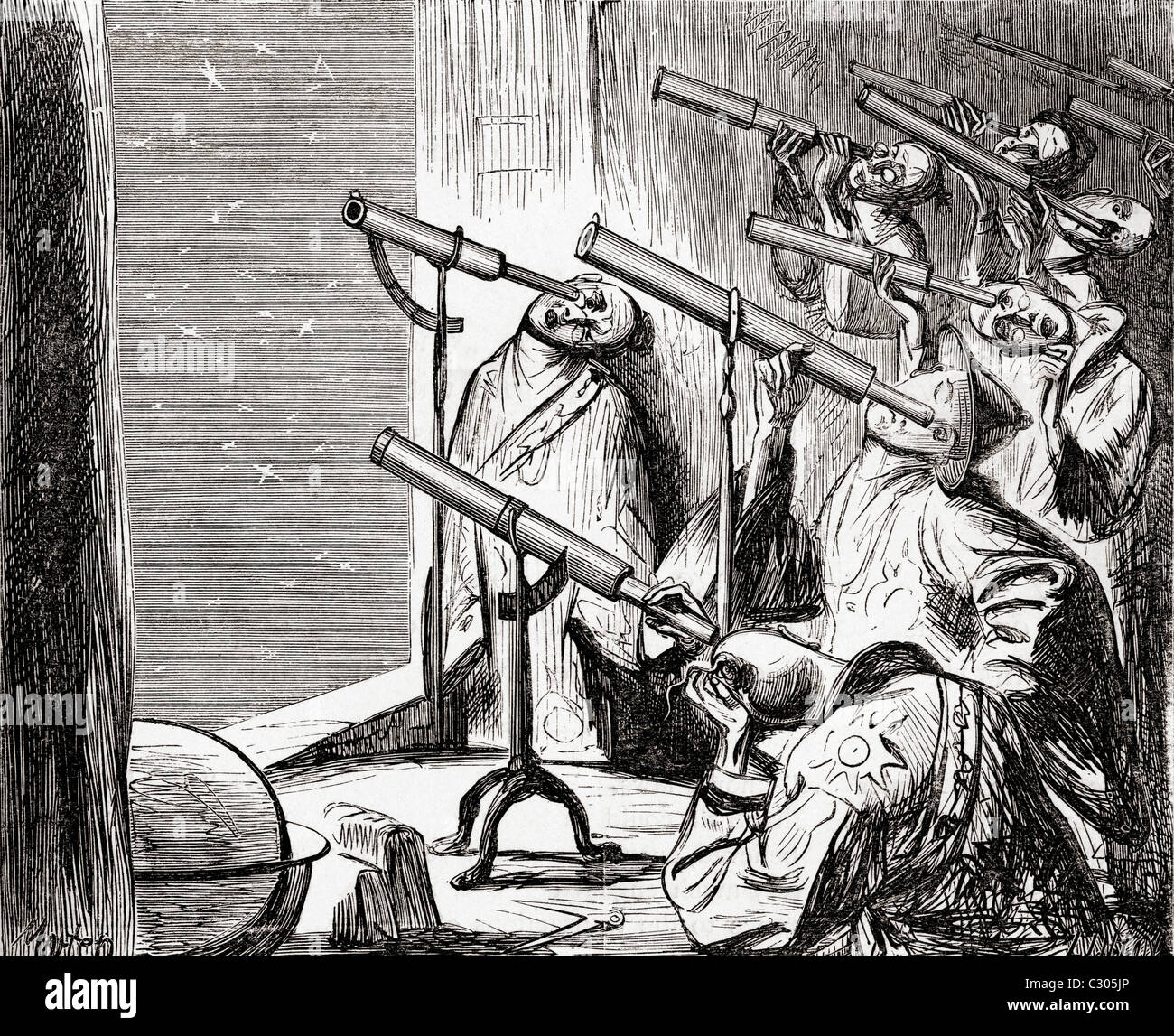
Could Homer have believed cyclopses really existed? See L. Sprague De Camp's interesting non-fiction book, "Lands Beyond."
|
|
 |
|
 |
Showing posts with label education. Show all posts
Showing posts with label education. Show all posts
Tuesday, October 10, 2017
Pete Teaches Science Fiction --Class #2
Early writers

Sunday, October 8, 2017
Teaching English 101 to low ability students: developing a research topic
Because students often did not attend class, and the text book was not appropriate to their reading level, I made an effort to provide the materials required in a way that the students could access them any time and any place they might wish. Fortunately youtube offers a wealth of such materials.
Since part of learning to do academic writing, or any sort of writing for that matter, is to choose an appropriate topic and develop it in an appropriate way, I devoted a class to that topic.
When it comes to research paper topics, there's a lot of fine materials out there and here are some of my favorities.
As with most writing topic, the Purdue Owl contains useful materials:
https://owl.english.purdue.edu/owl/resource/658/03/
But youtube has many materials as well.
Saturday, September 23, 2017
Frankenstein --Pete Teaches Science Fiction -Class #1
I recently had the chance to teach a non-credit class on science fiction at the local engineering school. Of course, I accepted. And, although we've only completed three weeks I am enjoying myself and so are the students, I think.
Class #1 was devoted to the question of "Can one define what science fiction is?" and "What is the first Science Fiction story?"
I don't claim it's a definitive answer, but I chose Mary Shelley's Frankinstein as my answer.
In fact, I completely admit I took this answer from Brian Aldiss's wonderful book, "Billion Year Spree."
https://www.amazon.com/Trillion-Year-Spree-History-Science/dp/0380704617/ref=sr_1_1?s=books&ie=UTF8&qid=1507513805&sr=1-1&keywords=trillion+year+spree+the+history+of+science+fiction
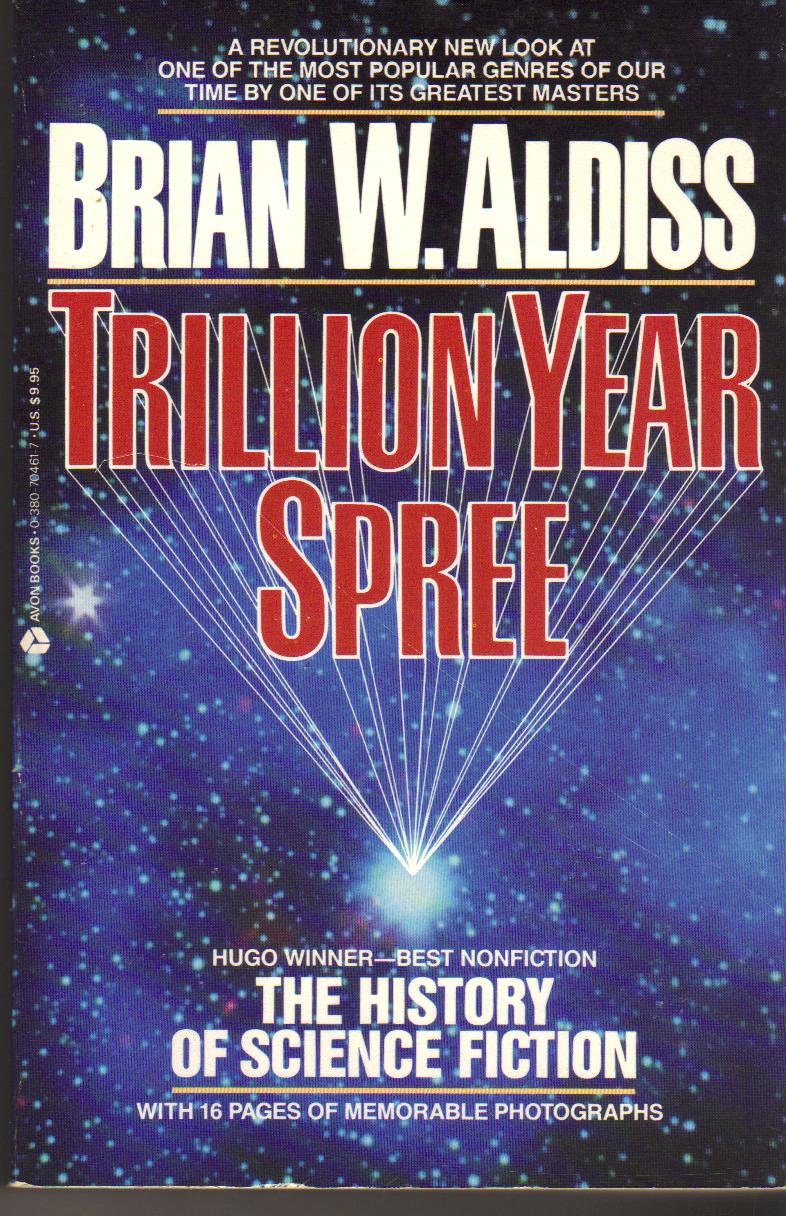
A wonderful book well worth reading and in much need of an update.
So here's a bit on Frankenstein, or the Modern Prometheus by Mary Shelley.
The story of the writing of Frankenstein is fascinating but has also been documented many times before.
For instance see:
http://www.history.com/this-day-in-history/frankenstein-published
or
http://www.thedailybeast.com/the-summer-storm-that-inspired-frankenstein-and-dracula
This entertaining and well done video includes much on that subject, although I prefer to stop the video at about the point roughly half way through where the SPOILERS on this classic novel (much different from the films) start:
Mary Shelley's Frankenstein (as well as Pollidori's much forgotten but highly influential novel, "The Vampyre.") were written on a particularly wild weekend by a group of decadent Bohemians including Lord Byron, the poet, and Mary's husband Shelley, another decadent, wild poet.
I'd heard there was a movie based on this weekend and the events that occurred. To my surprise, I learned there were two. interestingly, they were made only two weeks apart. "Haunted Summer" and "Gothic" --interestingly I stumbled across a bizarre looking film called "Liztomania" that was also produced by Ken Russel, producer of "Gothic."
Although "Liztomania," had nothing but nothing to do with anything related to the class, save for some bizarre science fiction imagery, I showed it to the students and they seemed to enjoy it.
http://www.imdb.com/title/tt0095280/
http://www.imdb.com/title/tt0091142/
Liztomania by Kurt Russel
https://www.google.com/search?q=Franz+Liszt&oq=Franz+Liszt&aqs=chrome..69i57&sourceid=chrome&ie=UTF-8
http://www.imdb.com/title/tt0073298/
=============
Finally, for students who wished to find the text of Mary Shelley's Frankenstein, it's on line in several places.
http://www.gutenberg.org/ebooks/84?msg=welcome_stranger
http://www.gutenberg.org/ebooks/6087
Thursday, May 4, 2017
An Introduction to Teaching English composition to low level adults -- My experiences.
In January of 2017, I was given the chance to teach English 101, Academic Writing and Research, at the local for-profit, vocational college. Although accredited by the Middle States Commission on Higher Education, this is one of those places that specializes in recruiting from often first generation, often minority, generally low academic level students who would not do well at other institutions, arranging for federal and other loans for them to enable them to complete their studies, and then running them through various programs focused on job and vocational training. The college also offers two year programs and, although English 101 is being phased out and replaced with a course oriented towards vocational and job needs than academic needs.
At the time, however, not only did it exist, but it was a required course for some students who needed it to graduate in their programs. Curiously, unlike a normal college where students take English 101 first semester to develop the skills required to complete their studies and finish their program, at this school the majority of my students were in their last semester and had already completed the majority of their classes. This was particularly interesting as many of them showed serious academic deficits.
At the last minute their previous English 101 instructor was unable or unwilling to continue and I was hired as a last minute replacement. In fact, they came to me, unsolicited, without my ever having applied to work at the school.
Over the next few months, I found myself teaching academic writing to a small group of usually college age adults. There were ten students in the class, at the start, although one was later expelled, reducing the student load to nine. These students were all first college and their background proved a challenge to teaching.
Over the next semester, I learned that in my class none of the students were aware of what a master's degree was, what a standardized test was, what the SAT's were, or who Steve Bannon, the controversial adviser to recently elected President Donald Trump, was. Nor, generally speaking, did they consider it abnormal or unusual that they didn't know these things, and generally had little interest in learning who or what they were.
Clearly, this was not the typical group of college students. And they had special challenges.
Most read at a low level. In many cases, they were not able to comprehend texts and newspaper articles unless given assistance, assistance they would often not ask for or seek out. It didn't help that the assigned textbook, as well as the verbiage on the syllabus, was far above their reading level, thus making the (quite expensive) textbook virtually useless for teaching. Although I can't discuss the exact rationale behind the inappropriate textbook or the syllabus, they both seemed to have been written for someone other than my students (and probably was).
Why? It's difficult to say. Ability to use and write in standard English was also a challenge. One had a non-Western, South-West Asian language as his native language (he was also the hardest working and most studious student in the class.) Two others were Hispanic and although their English was at a high conversational level, I suspect one had problems stemming from his bilinguality. (To achieve in an academic setting, a student must be able to write and communicate at a sufficient level in the language of instruction, in this case English. This level is higher than that required for must mundane, day to day, workplace and social interactions. If a person has this level of ability in one language, for instance, most Chinese who come to the USA to study, they can often acquire it through education and study in a second language. With some bilingual students, they function at a non-academic level in two languages and then bringing them up to an academic level in either is a challenge that should ideally be addressed before placing them in a classroom. However in this case it had not been addressed.) The other attended class so rarely that I never did get a chance to really assess her English level thoroughly. Another, although a native English speaker, spoke a "non-standard" Caribbean dialect of English as her native tongue,
Which left six students who were native English speakers, but even these often showed problems. For instance, when I began my class with an assessment I like to use ( see: Assessing students writing through using Cambodian language pop music ) , two students, both White, native English speaking American women who spoke "working class English" turned in papers that included the line "Her and her friends were dancing." (as opposed to the more "standard" "She and her friends were dancing.")
For the next 15 weeks, each Wednesday for three hours I taught my class. Although I think my instincts were good, and I adjusted as time went on and I became more familiar with the expectations and restrictions of the administration and the abilities and level of motivations of the students, it was not an easy teaching assignment.
To add to the challenges, while at most colleges English 101 -Academic Writing and Research is required in the initial semester or year so that the students develop an introduction to the skills that they will need to use to acquire their degree, in this case the course was being taken by many students near the end of their degree, students who expected to be entering fields where they would not need to do much academic research or writing, and who thus felt they had little practical need for the skills that were taught in the course.
Classes were often skipped, often attended late if at all, homework left undone, and the administration's approach to the problem was keep the students happy, do not confront them, and if they fail, well, they can take the class a second time --and be billed for it twice.
Sunday, December 25, 2016
More Christmas Specials and Movies for English Language Learners and Foreign Students
Last time on this blog, I shared a few of the more common American Christmas specials. This time, I'll add a few more, as well as a couple of the best known Christmas films. These are all iconic Christmas specials well known in the USA and I introduced them in my advanced class a couple weeks ago.
Charlie Brown is most certainly an American icon. Seems like this should be included.
Last month in this class, as discussed in a post a few weeks ago on movies, I showed the Thanksgiving film, "Pieces of April," spread over a few weeks. I seriously considering give this film, "A Christmas Story," the same treatment and only decided against it as I did not wish to repeat myself with the same kind of class, two months in a row. Undoubtedly a good film for foreign folks wishing to understand American culture. --or at least American culture of a few decades ago.
A true classic and a well known one. Surely it can't help for people wishing to understand our culture to check this one out, can it?
# 5 -- A Charlie Brown Christmas
Charlie Brown is most certainly an American icon. Seems like this should be included.
# 6 -- A Christmas Story
Last month in this class, as discussed in a post a few weeks ago on movies, I showed the Thanksgiving film, "Pieces of April," spread over a few weeks. I seriously considering give this film, "A Christmas Story," the same treatment and only decided against it as I did not wish to repeat myself with the same kind of class, two months in a row. Undoubtedly a good film for foreign folks wishing to understand American culture. --or at least American culture of a few decades ago.
#7- It's a Wonderful Life
A true classic and a well known one. Surely it can't help for people wishing to understand our culture to check this one out, can it?
# 8 - A Miracle on 34th Street
The story of a "real" Santa Claus in New York City. Another classic worth checking out.#9 -- Santa Claus Conquers the Martians
Okay, here I might be pushing it. I admit this strange and bizarre classic in "bad" movies has a special place in my heart. On the other hand, I did show it to my students in the advanced class, a group primarily composed of educated, middle class Asian housewives and they seemed to consider the brief exposure ten minutes well spent.Sunday, December 18, 2016
An Introduction to Christmas Special for "New Americans," Foreign Students, and ESL Students --Part One
Once a week, I teach an advanced ESL class where most of the students are wives of highly educated foreign workers, often from the tech industry. They generally speak English well and much of the class is cultural enrichment.
What follows is a list of Christmas Specials that I introduced my students to this week.
I began by explaining that Christmas is a religious holiday celebrated only by those who are at least nominally Christian and introduced the concept of separation of church and state. Nevertheless, I said, Christmas is clearly and important time of year and the separation of Church and State is not 100% (for better or worse) as evidenced by such things as "In God we Trust" on the money.
So, with no further ado, a list of Christmas specials for ESL and Foreign Students.
#1 --Frosty the Snowman
Although technically not a Christmas special, per se, this does tend to get shown around Christmas time. Therefore I began the class with it, perhaps to alleviate fears that I was going to push my religious beliefs or offend Muslims.
Like many of these I began with the song on which the television special was based, and explained the vocabulary and concepts in it. Therefore I began with this song.
I then followed up with the trailer for the TV show (or as close to the trailer as I could find. I am not convinced, despite the label, that this is really the TV show trailer.)
#2 --Rudolph the Red Nosed Reindeer
Again, I began with the song, explaining lyrics and vocabulary and cultural references. As an aside, and a piece of self criticism, this was not a terribly interactive lesson and was a bit lecture heavy. Not perfect, but once in a while, I feel, it's okay to do such lessons.
This was followed by the trailer for the TV special. (This is not the one I used in class, but how can one not enjoy this? Especially if you are from Schenectady, home of GE, as I am. )
#3 - How the Grinch Stole Christmas
This one I did a little differently than the others, because while the others started with songs, this one started with a book, a book by Dr. Seuss, so I began there. The I showed the trailer for the TV show.
I explained that while I thought the word "grinch" had not been an English word, before this song they could now use it to describe an unhappy, grouchy person. I then followed this up with the song, explaining that a lot of the vocabulary is quite intense and obscure (I actually had to look up a couple words myself, "wasty" for instance, and told my students so. I do make it clear to my students that I do not understand every English word and they should not expect to be able to do so either. )
I showed this partly to explain the cultural significance of the song. I kind of feel they were more impressed than I was, but it was still fun to see the US Navy band perform this classic.
This might have worked too, but probably not as well.
And finally I introduced them to the Jim Carrey full length movie. I confess, I steered them away from it, but explained I hadn't seen it myself and perhaps I should before saying bad things about it. On the other hand, with the cartoon being such a classic, I feel this entire movie is unnecessary. Competely unnecessary.
Wednesday, December 23, 2015
What is Fossilization? A common problem in English teaching and Teaching of English as a Second Language
We've all seen or heard it.
Someone who speaks English with, shall we say, a certain noticeable style.
In other words, people who have learned English in order to communicate and have often done so without much formal education or training in the language. Or perhaps they did have English classes but the classes were inconsistent and perhaps poorly conducted.
Such people often serve as translators in their places of work and when interacting with American society Despite the English grammar such people are often clearly of high intelligence, serve as leaders of their community, and, despite, the grammar problems, have learned to communicate when many other members of their community have not. So what's going on here?
Basically, bad habits. Bad, very ingrained habits. And sometimes a lack of understanding as to what correct grammar should be. In teaching of English as a second language there is a term for this. It is called "fossilization."

As most know, a "fossil" is when natures takes something, perhaps a piece of bone, shell, or plant, and converts it to stone. In geology and other sciences "to fossilize" means "to change something into stone and make it a fossil."
In language teaching "fossililzation" refers to the process where a grammatical structure, a way of speaking, is not only routinely formed incorrectly but is done so regularly and routinely and automatically by the speaker. This is something English teachers see regularly. It's a difficult process to fix, but there are ways to work on it.
Of course, this happens not just in English learning but in the learning of other languages too. Perhaps one reason the subject interests me is because I have a problem with fossilized structures in my Mandarin Chinese.
Someone who speaks English with, shall we say, a certain noticeable style.
"I no liking America food. I cooking you good Korea food."
or
"I learn Burmese very good as a child but I Karen, not Burmese."
In other words, people who have learned English in order to communicate and have often done so without much formal education or training in the language. Or perhaps they did have English classes but the classes were inconsistent and perhaps poorly conducted.
Such people often serve as translators in their places of work and when interacting with American society Despite the English grammar such people are often clearly of high intelligence, serve as leaders of their community, and, despite, the grammar problems, have learned to communicate when many other members of their community have not. So what's going on here?
Basically, bad habits. Bad, very ingrained habits. And sometimes a lack of understanding as to what correct grammar should be. In teaching of English as a second language there is a term for this. It is called "fossilization."

As most know, a "fossil" is when natures takes something, perhaps a piece of bone, shell, or plant, and converts it to stone. In geology and other sciences "to fossilize" means "to change something into stone and make it a fossil."
In language teaching "fossililzation" refers to the process where a grammatical structure, a way of speaking, is not only routinely formed incorrectly but is done so regularly and routinely and automatically by the speaker. This is something English teachers see regularly. It's a difficult process to fix, but there are ways to work on it.
Of course, this happens not just in English learning but in the learning of other languages too. Perhaps one reason the subject interests me is because I have a problem with fossilized structures in my Mandarin Chinese.
Monday, December 21, 2015
ESL / Teaching English as a Second Language teaching credentials
Someone asked me about what credentials are needed to teach English as a Second (or other) Language.
To answer the question, I'd have to know what your goals were in order to see how the certification fits the goals,
Last person who asked me this question told me described her goal as "I want to live in Thailand and support myself teaching ESL while I volunteer to work with elephants," but I have heard people study ESL teaching for other reason, too.
Education can help you by enabling you to do something or by giving you fancy papers that enable you to get jobs or ideally both, but they are not always the same, so . . .
1) teach folks you know ESL. Literacy Volunteers had a good training program in 2008 when I took it and probably still does. Short, simple, good, --four evenings of training for 35$ plus a commitment on your part to be a volunteer tutor. I'd recommend it highly if it's still the same.
2) Teach ESL while living abroad (okay, you need to remember you don't actually "travel" all the time while doing this. Often you just live abroad, hang out, commute back and forth through crazy foreign traffic, and deal with culture shock. There are pros and cons.)
The requirements vary by country. To learn them hang out online in forums in the target country and read things like the Lonely Planet Guidebooks and its competitors (Rough Trade? I think that's the name. --BTW, here's a start on the Lonely Planet youtube channel, have fun: https://www.youtube.com/watch?v=li6w8oqmyzo )
Some places the qualifications are "foreign" and at times offensive. i.e. no ESL training required, advanced degrees preferred, the higher degree the better, but field unimportant --i.e. PhD in Chemistry or Theology often trumps an MS in TESOL, white faces often preferred but not always -- https://www.youtube.com/watch?v=CqtS3hSwq3o the part on ESL recruiting is often dead on true and Asian faces don't do much better. ) Some places no certifications are necessary.
Do your research.
Sometimes they want a certificate such as the Oxford. Some times and places you want to shake them and say "But you should value this! It is useful and your requirements are absurd!" and you will be 100% dead on correct but it just won't matter because it's not your country or culture and they make the decisions. (a friend of mine was quite upset when her ESL employer in Kunming China hired a French speaking Caucasian with a thick accent over her native speaking Chinese American friend. OTOH, she learned to accept such things and now has a PhD in anthropology from Cornell with most of the research done in the field in China.) Alas!
3) Teach at for profit places in the USA (Boston has several, I've worked at these. In New York State licensing requirements discourage them from starting here.) These general require a relevant MA or MS or a certificate like you have. However, they will usually keep a good teacher with a certificate over a mediocre one with an MS in TESOL.
My experience is most of the not-for-profits want the same credentials in Boston.
4) teach at a college ESL in the USA --MA or MS in TESOL pretty much required. Sometimes a relevant PhD.
5) teach in public schools. Check each state's requirements. They vary widely.
Generally a certificate like yours is officially not useful (I think) but if it comes with knowledge then it can be useful.
i.e. for example, let's say you become a certified Massachusetts history teacher licensed to teach in that field. Suddenly the states decrees that they want all teachers to have a knowledge of ESL and pass a test on it or take additional training. If you pass the test, bingo! you don't need to take the training. You get to move to the top of the qualified teacher list while the others need to be trained and sit at the bottom. Double bonus if you can speak Spanish!
This really happened two years ago BTW. My understanding is a few years ago the push was for Special Ed qualifications for all Massachusetts public school teachers. Last year it was ESL.
Again do research.
Subscribe to:
Posts (Atom)